The Revolutionary War Experience of John Stufflebean: Probably Not What He Expected!

John Stufflebean, my husband’s 4X great grandfather, baptized as Johannes Stoppelbein on 28 February 1756 in Kinderhook, Columbia, New York, was a pensioned soldier of the American Revolution. His application tells the story of his life, mostly lived on the frontier, and in places where primary records are sadly lacking.
Here is his story, recorded by the Estill County, Kentucky clerk on 21 August 1832, from John’s own memories:
When the Revolutionary War began, John Stufflebean was living in New York, near the New jersey and Pennsylvania state lines.
In 1776, Captain Jacob DeWitt formed a company of rangers to guard the frontier in the portion of New York State that today forms Orange and Ulster Counties. John Stufflebean enlisted and served as a private, probably for much longer than he ever envisioned given his capture by the Indians.
The clerk recording John’s pension statement in 1833 said John was illiterate. He couldn’t read or write even so much as to sign his name, nor could his children according to the clerk.
John’s lack of formal education was definitely no reflection on his innate intelligence. He lived a long life, much of it spent on various frontiers, including the Revolutionary War frontier.
His life during the war was much more tumultuous than most others. Service in Captain Jacob DeWitt’s company started off rather quietly with postings to towns like New Windsor, New York and Hackensack and Paramus in nearby Bergen County, New Jersey, all relatively close to home.
However, in 1778, while out on reconnaissance, John was captured by Colonel Joseph Brant’s Indians and taken prisoner.
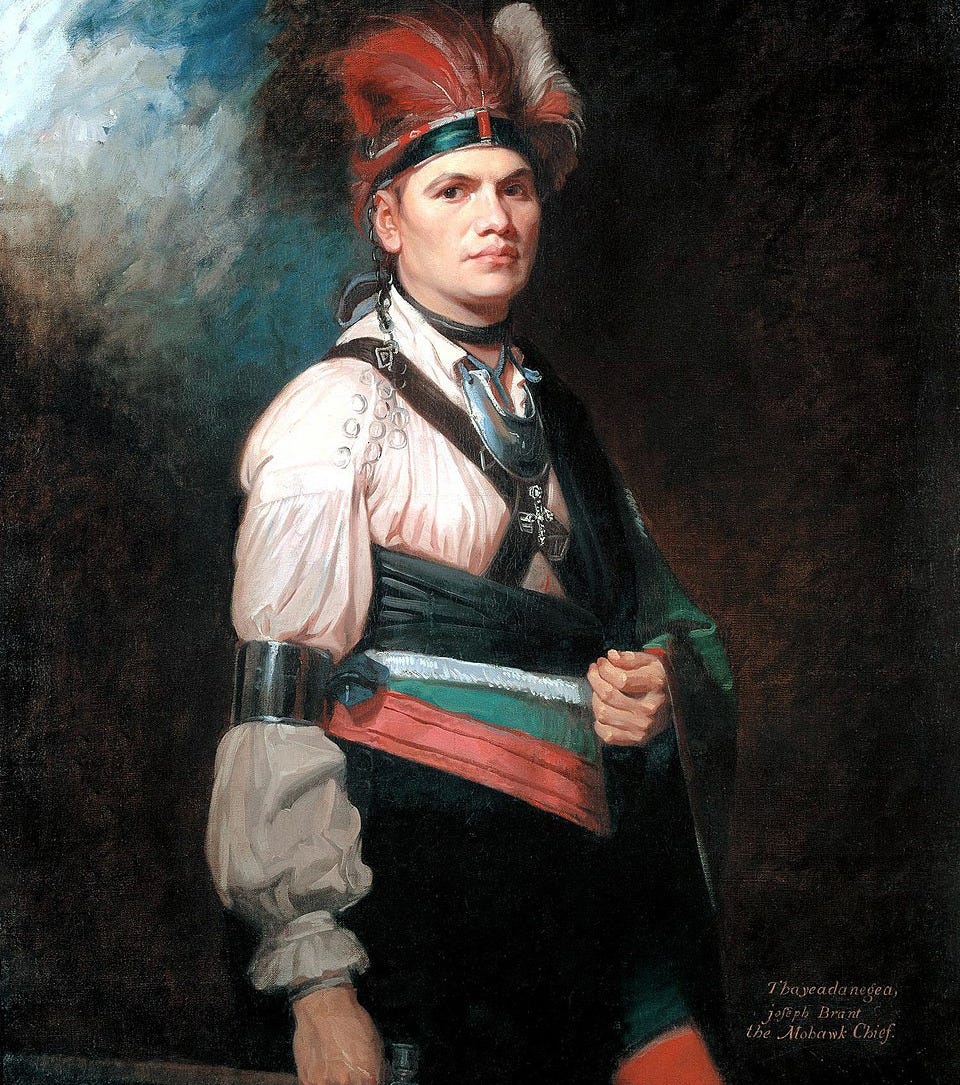
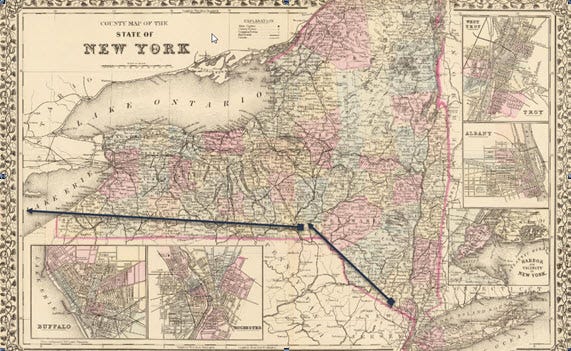
He detailed how the Indians and prisoners crossed the Delaware River on logs and wooden rafts, continued traveling westerly across New York and crossed the Susquehanna River in the same manner. Eventually, they arrived at the Mohawk settlement located about eighteen miles south of Niagara Falls.
John’s pension declaration includes being forced by the Indians to run the gauntlet, which was a daunting experience for anyone. The gauntlet was created by two rows of men wielding various types of weapons. It was a public spectacle designed to embarrass, punish and humiliate, but men sometimes died from their wounds. Those who survived were deemed to have displayed bravery and, perhaps, like Revolutionary War General John Stark from New Hampshire, physically fought back and earned the admiration of their captors.
John Stufflebean said no more of his own gauntlet experience, but he was a young man in his 20s and likely physically fit enough to hold his own as he survived and lived many more years.
About 1780, the Mohawks sold their prisoners to Col. John Butler, reportedly for a barrel of whiskey. They were then taken to Detroit and held for a little more than two years.
John did not mention in his pension application that, in 1783, he agreed to fight for the British. However, his name appears on a single muster roll of Butler’s Rangers, signed by Jacob Ball, as “John Stufflebem” on command to Detroit.
After years as a prisoner of war, John may well have seen agreeing to join the British as his best hope for escaping. He is only found on that one muster roll and another fateful meet up also occurred in 1783.
John and five other soldiers, presumably all patriots who saw their chance for freedom, took off from their assignments, traveled down the “Lake of Water” (Lake Erie?) for over 100 miles through wilderness to the Muskingum River and then to the Ohio River.
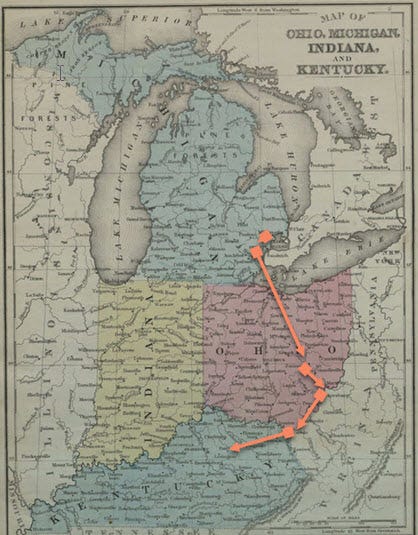
From there, they met up with James Garrard’s company heading into Kentucky.
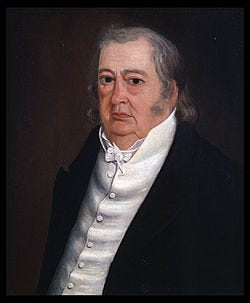
James Garrard, later governor of the State of Kentucky from 1796-1804 organized a company of settlers heading from Virginia to the frontier near the close of the American Revolution. John described how Mr. Garrard took some convincing that the men were really patriots and not British soldiers looking for trouble, but they were accepted into the group. That is how John Stufflebean came to make Kentucky his home for most of the rest of his life.
Kentucky was very much the frontier in 1783 and, like Col. Garrard, John Stufflebean originally settled near Paris, Bourbon County. Records are scarce that early in Kentucky, but John does appear on the Bourbon County tax list in 1790 with one white tithe and two horses or mules.
John remained in Kentucky for most of the years of his long life, marrying twice, raising a large family of seven sons and one stepson. However, in the early 1840’s, John and wife Elsee moved to Kankakee, Randolph, Illinois, to be cared for by their son, Jacob.
John Stufflebean died there on 16 January 1844.
There are statements to be found that John was married in New York and had a couple of children, but no record of them has ever been found.
John must have wondered at how his life turned out, far from New York and his extended family. It’s not likely that, when he enlisted in military service, that he ever expected to end up in a place he had never heard of - Kentucky.
Wow! What a story!
Running the gauntlet sounds terrifying. Definitely a life full of adventure.